esiBlog
Machine Concepts Without Control Cabinets for the Hygiene Sector – Compact Drives in Hygienic Design
Requirements: Hygienic environment, IP69K, hygienic design, servo drive
Until now, the only practical solution for this combination of requirements was to use a control cabinet controller and a corresponding control cabinet, or alternatively to position the drive units next to the machine or conveyor belt behind a protective enclosure.
In other words, today you either install the compact drive outside the hygienic area or mount the controller in the control cabinet—in which case you can use stainless steel drives. From our perspective, both options often represent a compromise—and an expensive one at that.
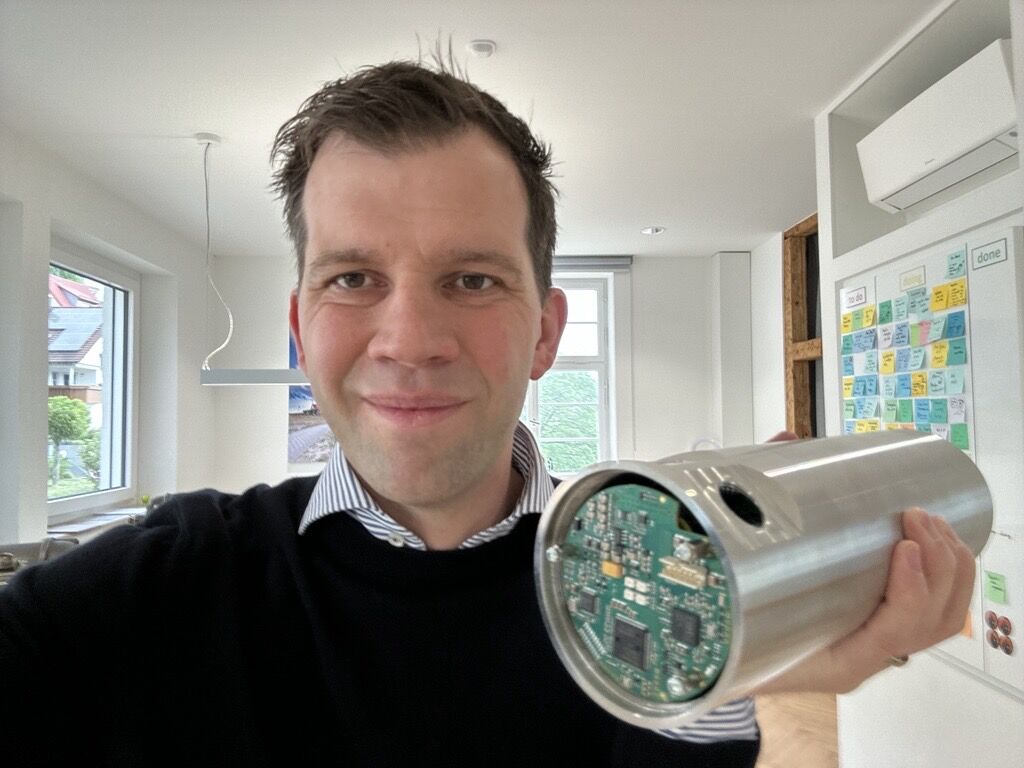
NEW:
What I’m holding in the picture eliminates this compromise! It’s a decentralized servo drive with a hygienic design and IP69K rating.
Up to approximately 800 W of power—or slightly less if you want to keep the housing temperature below 60°C—these compact drives meet both hygiene and drive requirements, even in the splash zone.
Why is this solution also more cost-effective?
✔️ You can eliminate the need for a stainless steel control cabinet, or at least make it very small
(though you’ll still need high-performance power supplies).
✔️ You save a huge amount on cabling—especially when you factor in daisy chaining.
✔️ You work with simpler DC cables in the 48V range—low voltage—which also saves costs in various areas.
❓Are the controllers more expensive because they’re integrated? No!
While they are significantly more compact than “standard controllers” and therefore slightly more complex to manufacture, the high level of integration within the servomotor saves a lot of connectors and cables. That more than makes up for it. Bottom line, you can calculate (rough rule of thumb 🤜):
Cost of power supply ➕ compact controller 🟰 cost of control cabinet controller.
(You save on the rest, e.g., the control cabinet).
When implemented intelligently, we see significant cost savings in a decentralized approach—especially in the hygiene sector. This is because another, often overlooked advantage comes into play there, stemming from a specific characteristic of stainless steel drives:
Stainless steel drives inherently have a lower power density than comparable aluminum motors. This is referred to as derating. In other words, the permissible current draw of these motors is lower relative to their installation space than that of aluminum servos. And even more importantly: Stainless steel drives generally (normally) must not be exposed to temperatures >60°C or a maximum of 80°C (with touch protection). Drive controllers also operate very well within this temperature range. Ultimately, this means: No additional derating due to the integrated servo controllers—unlike with decentralized aluminum motors.
It’s a complex topic—I know.
Bottom line:
You can get by without a control cabinet even in hygienic applications. It saves costs and simplifies the design.
👉 Feel free to follow me on LinkedIn for more practical insights on drive technology.