FAQ: Signal Converters / Signal Conditioners
A signal converter — also referred to as a signal conditioner or signal transformer — converts a measurement system or control signal from one format into another that can be processed by the downstream controller or display. In mechanical engineering, this is necessary wherever encoders, drives, or controllers from different manufacturers with different signal levels or protocols need to work together.
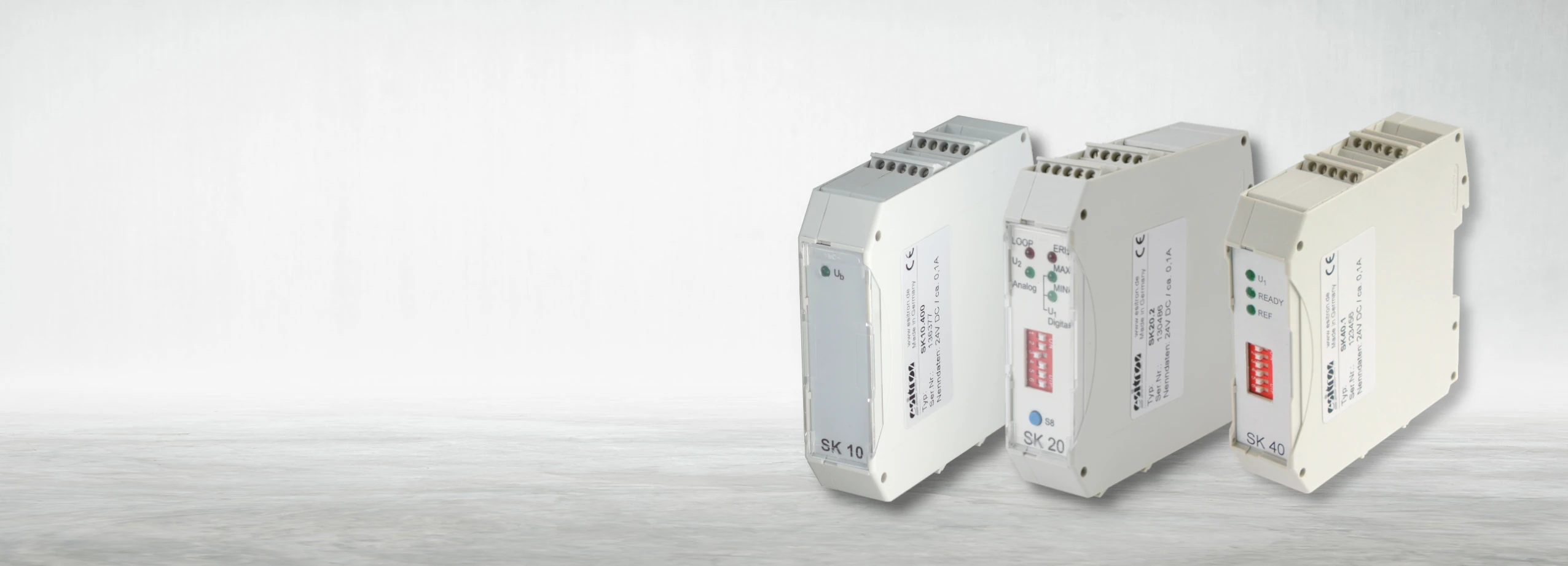
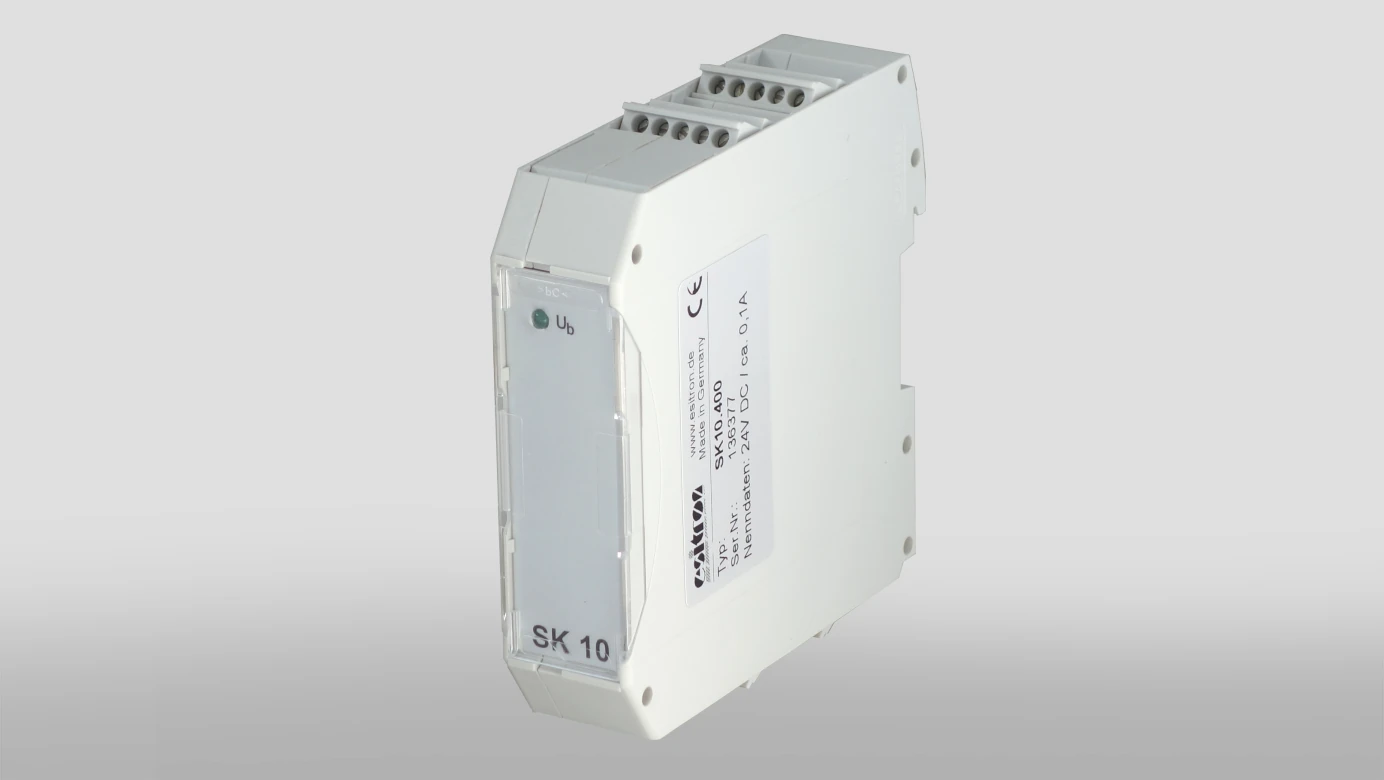
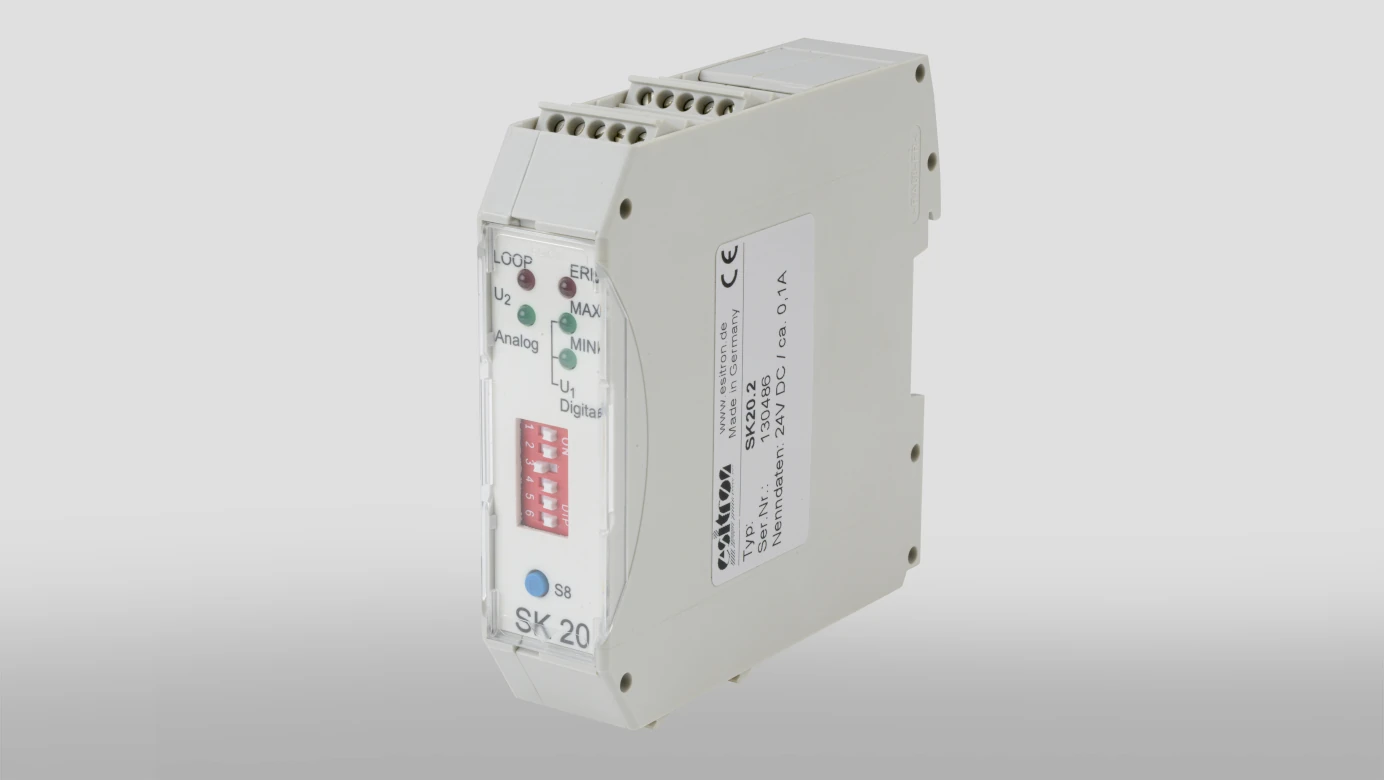
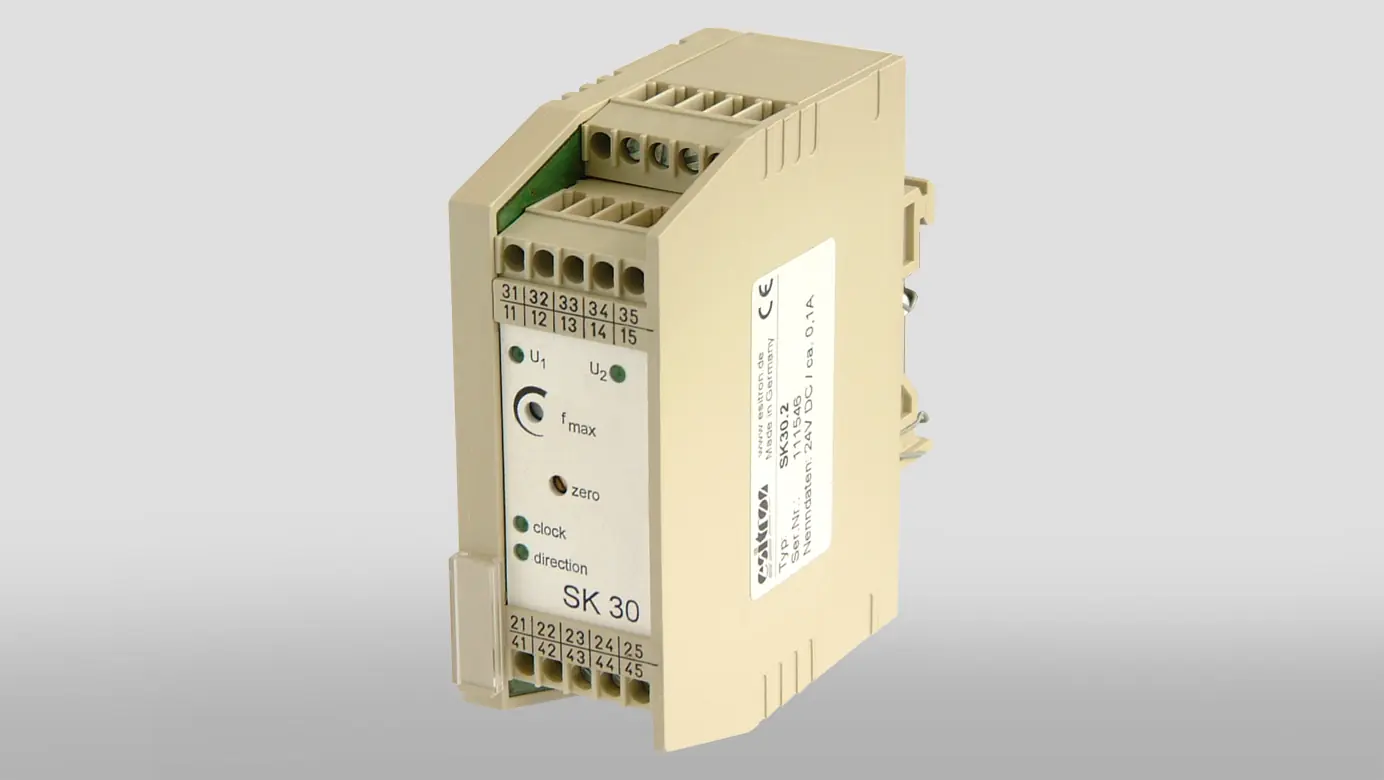
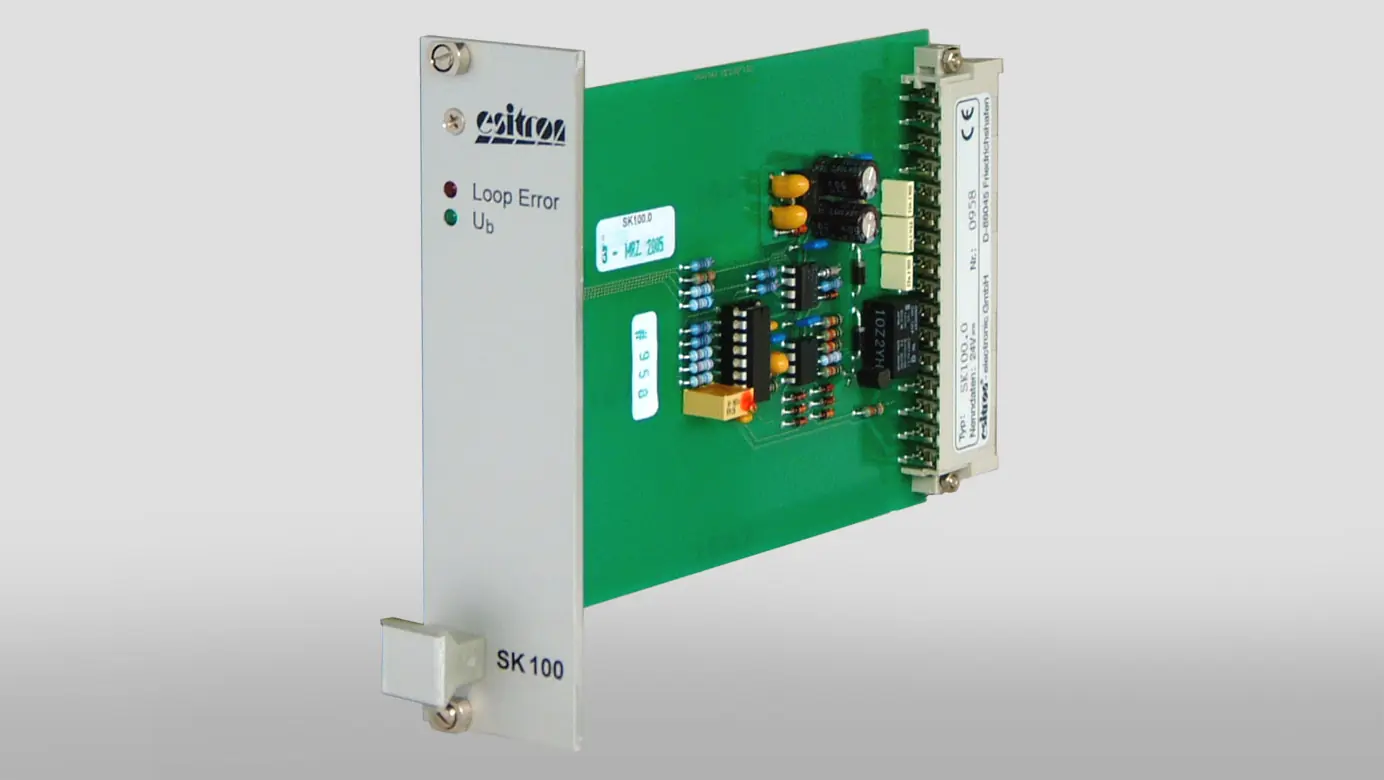
The esitron signal converter portfolio comprises four devices for different conversion tasks: The SK10 converts incremental encoder signals and enables level conversion between 5 V (TTL) and 12–30 V. The SK20 converts digital absolute measurement system signals with SSI interface or Start/Stop signals into analog output quantities (0–10 V or 0/4–20 mA). The SK30 enables the connection of stepper motors to position-controlled servo controllers via incremental encoder simulation. The SK100 converts analog input signals of ±10 V into a 4–20 mA current loop. All devices are designed for DIN rail mounting.
Weitere Informationen:
The SK20 reads encoder data with SSI interface (synchronous serial interface) or Start/Stop signals and converts them into an analog output signal — either 0–10 V or 0–20 mA / 4–20 mA. Single-turn and multi-turn encoders up to 25 bits are supported; the analog output achieves a resolution of 16 bits. The minimum and maximum values of the output range are freely programmable, enabling flexible adaptation to different control and display environments. The SK20 can be used in stand-alone operation or in parallel with existing systems.
Weitere Informationen:
Many position-controlled servo controllers expect an incremental encoder signal as feedback but cannot directly process a stepper motor drive signal. The SK30 bridges this gap: it converts a ±10 V analog signal into pulse and direction signals for stepper motor control, and simultaneously supplies an incremental encoder simulation (A/B signals, 5 V, RS422) back to the servo controller, which can then close the control loop. The pulse frequency is adjustable.
Weitere Informationen:
With galvanic isolation, the input and output sides of the device are electrically isolated from each other — there is no conductive connection between the two signal circuits. This prevents equalization currents between different parts of the installation, protects sensitive measurement and control components from overvoltages, and significantly reduces interference from ground loops. The SK10, SK20, and SK30 from the esitron portfolio are galvanically isolated — an essential feature for reliable use in industrial manufacturing machines and installations.
Weitere Informationen:
The SK100 is the right choice when an analog control signal of ±10 V needs to be converted into a standardized 4–20 mA current loop — for example to connect a servo controller to a PLC or process control system that operates exclusively with current interfaces. With a zero-point error of 0.1%, a maximum error of 1%, and a cut-off frequency of 5 kHz, it is also suitable for dynamic control tasks. In addition, the SK100 monitors the current loop and detects cable breaks.
Weitere Informationen:
Yes. The esitron signal converters are designed as passive signal conditioners between encoder and controller and do not intervene in existing control structures. The SK20, for example, can be operated explicitly in parallel with an existing system — the encoder is thus read simultaneously by both systems, without any need to modify the existing wiring. For application-specific questions regarding your particular installation, the esitron team is available for direct consultation.